The Wealth of Minds: South Sudan’s Push for Human Capital and a Knowledge Economy
May 20, 2026 507 views min read Africa South Sudan
Table of Contents
South Sudan’s long-term development challenge is often discussed through oil, conflict, humanitarian need, and state fragility. Yet a more transformative lens is human capital: the education, health, skills, creativity, and productive capacity of its people. Drawing on public information from the World Bank, UNICEF, UNDP, UNHCR, and Jiinubi, this article argues that South Sudan’s path toward a knowledge economy must connect education, girls’ empowerment, health, agriculture, digital enterprise, diaspora engagement, institutional reform, and locally relevant technology platforms. The central claim is simple: South Sudan’s greatest future resource is not only natural wealth, but trained, connected, healthy, and opportunity-ready minds.
1. From Resource Wealth to Mind Wealth
South Sudan is frequently described through crisis: conflict, displacement, inflation, humanitarian need, weak institutions, and dependence on oil. These realities are serious. The World Bank notes that the country continues to face overlapping pressures from climate shocks, violence, disease outbreaks, food insecurity, fragile services, and a struggling economy.
But a country cannot be understood only by its crises. South Sudan is also a young nation with a young population, deep cultural memory, strong community networks, land, livestock, rivers, diaspora knowledge, and a generation still searching for the tools to build something larger than survival.
This is where the idea of human capital becomes important. Human capital refers to the knowledge, health, skills, confidence, discipline, creativity, and productive ability that people carry. A knowledge economy is what happens when that human potential becomes organized into schools, businesses, technology, research, agriculture, public service, health systems, digital platforms, and institutions.
For South Sudan, this is not a luxury idea. It is a development necessity.
2. Beyond Oil: Why Human Capital Matters
Oil has shaped South Sudan’s public finances and national economy. But oil dependence also creates vulnerability. When production falls, pipelines are disrupted, or export routes become insecure, the effects move quickly through the economy. The World Bank reported that South Sudan’s FY25 economy contracted after a sharp drop in oil production linked to the DAR pipeline shutdown.
This is the deeper lesson: natural resources can generate revenue, but they cannot by themselves build a resilient nation. A knowledge economy does not mean abandoning oil, agriculture, or livestock. It means using knowledge to strengthen every sector. Engineers improve infrastructure. Teachers raise literacy. Nurses protect the workforce. Farmers use climate information. Entrepreneurs create services. Digital platforms help businesses reach customers. Civil servants turn policy into delivery.
South Sudan’s central development question is therefore not whether it has wealth. It does. The question is whether it can convert its human potential into national capability.
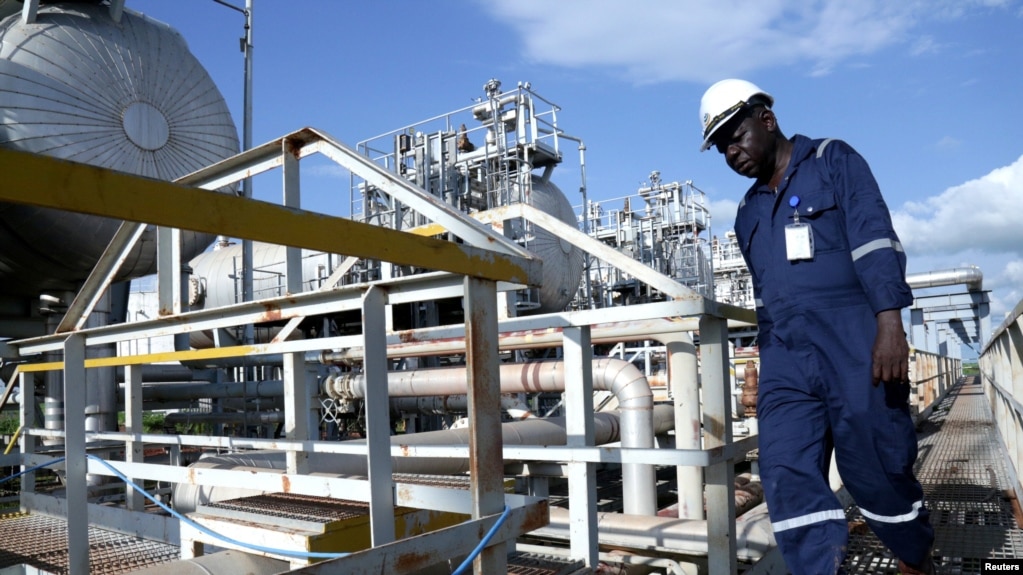
FILE - A worker walks by an oil well at the Toma South oil field in Ruweng state, South Sudan.
3. Education as Economic Infrastructure
A classroom is not only a social service. It is economic infrastructure. Every child who learns to read, count, question, write, and solve problems becomes part of the country’s future productive capacity.
"More than 2.8 million children are out of school in South Sudan, with girls forming the largest group of out-of-school children."
UNICEF’s warning is direct
A generation of children in South Sudan is being deprived of a fair chance in life.
"Over 70% of children are out of school; girls are the largest affected group."
That statement should sit at the center of any serious discussion of the knowledge economy. When children are outside school, the loss is not only personal. It becomes national. South Sudan loses future teachers, nurses, engineers, entrepreneurs, researchers, coders, farmers, public servants, writers, and leaders.
Education is therefore not charity. It is productivity. It is peacebuilding. It is public health. It is future tax revenue. It is national imagination.
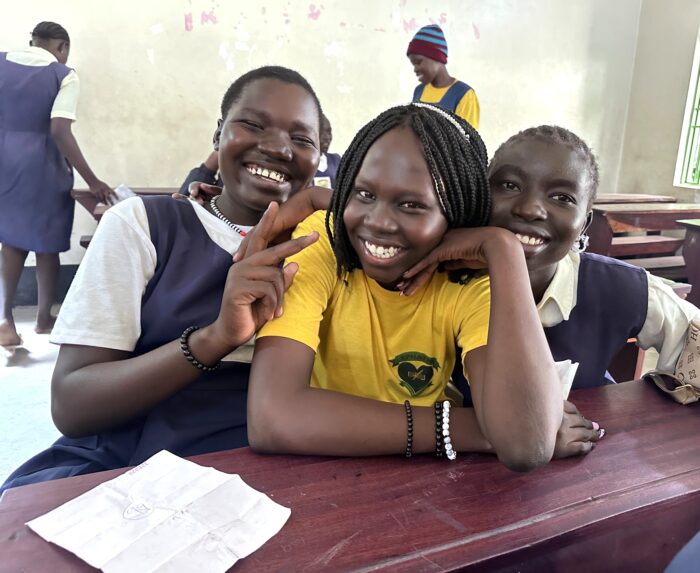
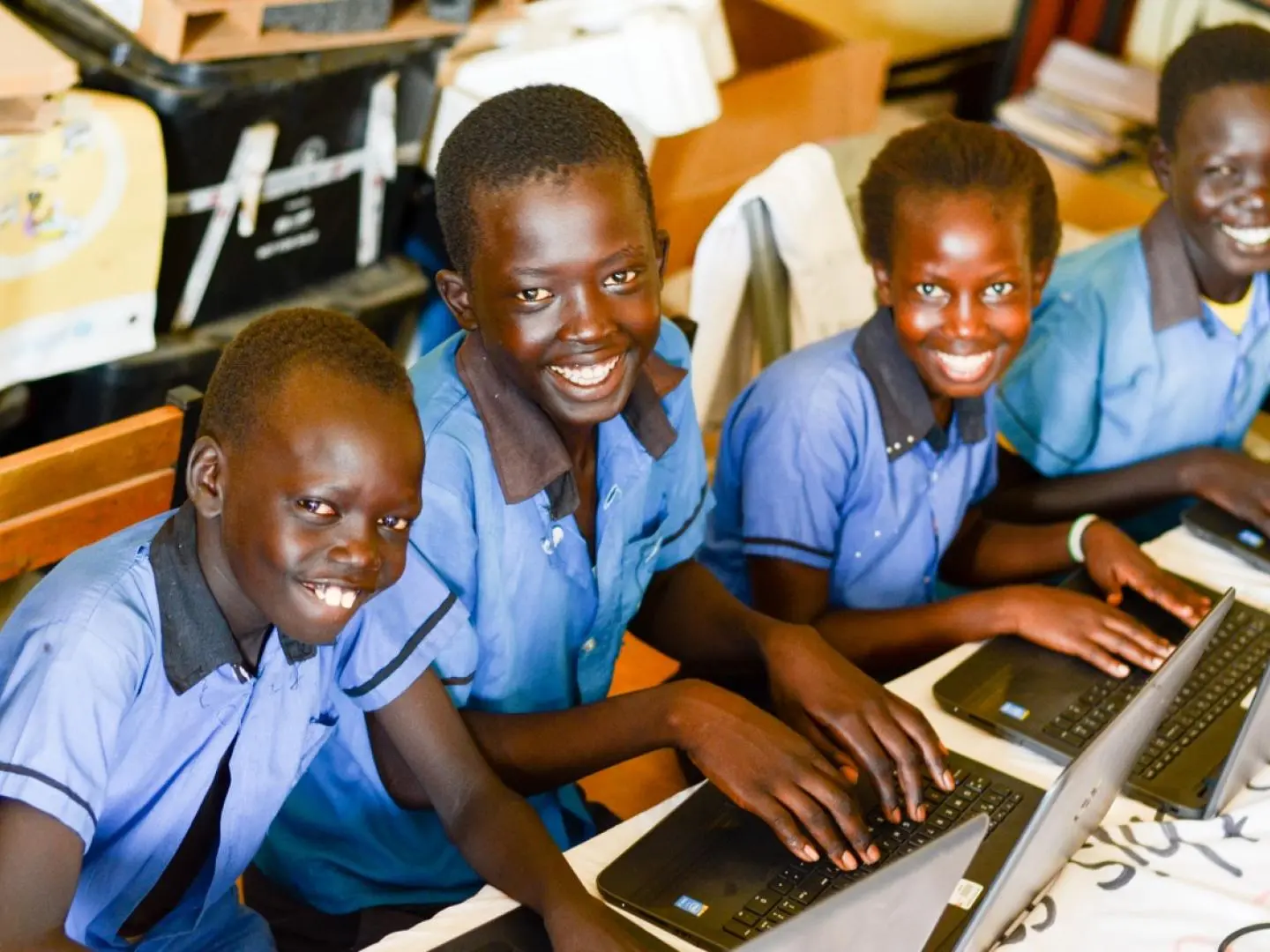
Schoolgirls in Bangasi Primary School in Yambio, Credit: Paul Black
School-Age Children Population Breakdown
Out of School % (70)
In School % (30)
4. Girls’ Education and the Multiplier Effect
No knowledge economy can be built while girls are pushed to the margins. Girls’ education is not a side issue; it is one of the strongest foundations of human-capital development.
UNICEF links girls’ education to lower risks of child marriage and early pregnancy, improved child survival, and stronger intergenerational education outcomes. A girl who stays in school is not only improving her own future. She is increasing the future possibilities of her family, her community, and the next generation.
In South Sudan, girls face barriers including poverty, early marriage, household labor, insecurity, cultural expectations, lack of sanitation facilities, and displacement. These barriers are often discussed as “education problems,” but they are also economic problems. Every girl denied education is talent removed from the country’s future workforce.
A serious human-capital strategy must therefore protect girls’ learning through safe schools, community engagement, menstrual health support, female teachers, scholarships, protection from early marriage, and pathways into secondary, technical, and higher education.
image source : girlseducationsouthsudan.com
5. Health, Nutrition, and Learning
Human capital does not begin at the school gate. It begins before birth, in maternal health, nutrition, vaccination, clean water, safety, and early childhood development.
A hungry child cannot learn well. A sick child misses school. A displaced child may lose years of education. A young person carrying trauma may struggle to concentrate, trust, or plan for the future. Health and education must therefore be treated as one connected investment.
The World Bank reports that its health work in South Sudan has enabled millions of people to access essential health and nutrition services. UNDP also highlights long-running health-system support, including HIV, TB, and hospital service support in South Sudan. These interventions matter because a knowledge economy depends on people who are alive, healthy, protected, and able to learn.
A trained mind needs a healthy body. A future worker needs childhood nutrition. A future teacher, nurse, farmer, or business owner first needs survival, safety, and care.
6. Digital Skills, Youth Innovation, and Enterprise
South Sudan’s knowledge economy will also require digital capacity. This does not mean copying Silicon Valley or importing development language from elsewhere. It means building digital tools around South Sudanese realities: mobile money, online learning, small-business websites, agricultural information, health reporting, logistics, local-language media, e-commerce, digital storytelling, and youth entrepreneurship.
UNDP South Sudan reports that more than 26,000 women and youth have been trained in vocational and agri-value chain skills, and more than 6,000 youth have received business start-up kits. It also highlights work related to digital financial inclusion and youth and women employability.
This is where skills become practical. A young person does not only need motivation. They need tools, training, connectivity, mentorship, markets, and platforms where their work can be seen and paid for.
Digital skills should not be treated as an elite urban advantage. They should reach rural youth, displaced communities, girls, teachers, farmers, health workers, small businesses, and the diaspora. A phone can become a market tool. A website can become a storefront. A digital wallet can become access to commerce. A blog can become public knowledge. A portfolio can become employment.
26,000+
women and youth trained in vocational and agri-value chain skills.
6,000+
youth received business start-up kits
Source: UNDP South Sudan.
7. Agriculture, Livestock, and Local Knowledge
A knowledge economy does not mean everyone must work behind a laptop. For South Sudan, knowledge must also live in farms, cattle camps, fisheries, markets, cooperatives, and climate-resilient livelihoods.
Agriculture and livestock remain central to South Sudanese life. But these sectors can become more productive when connected to research, veterinary services, improved seeds, irrigation, storage, weather information, market data, local processing, and farmer training. A farmer using climate information is part of the knowledge economy. A livestock worker tracking animal health is part of the knowledge economy. A women’s cooperative improving food processing is part of the knowledge economy.
The World Bank reports that its resilient agriculture and livelihood work strengthened food security for 244,974 smallholder households, supported farmer groups, and helped vaccinate 1.4 million livestock.
That is what a grounded knowledge economy looks like: not knowledge floating above the country, but knowledge applied to the country’s own land, livelihoods, and risks.
244,974
smallholder households supported.
1,400,000
livestock vaccinated.
World Bank South Sudan Overview.
8. The Diaspora as a Knowledge Bridge
South Sudan’s diaspora is one of the country’s most important human-capital assets. Across East Africa, North America, Europe, Australia, and other regions, South Sudanese professionals, students, entrepreneurs, health workers, researchers, artists, technologists, and community leaders carry skills and networks that can support national development.
Diaspora engagement should not be reduced only to remittances, although remittances are important for families and resilience. The diaspora can also contribute through mentorship, research partnerships, scholarships, remote teaching, investment, business connections, institutional support, cultural production, and digital knowledge transfer.
UNHCR’s Refugee Data Finder tracks forced displacement globally, reminding us that South Sudan’s population movements are part of a larger humanitarian and migration reality. But displacement can also create transnational networks. The challenge is to turn separation into connection.
A South Sudanese engineer abroad can mentor students at home. A nurse in the diaspora can support health-training initiatives. A business owner can connect local entrepreneurs to markets. A professor can help universities with curriculum. A technologist can support digital platforms. A writer can help shape national narratives.
The diaspora should be treated not as an audience watching from outside, but as part of the national knowledge system.
9. Jiinubi : Turning Knowledge Into Digital Enterprise
A knowledge economy is not built by education alone. It also needs platforms that help people turn skills, services, creativity, and ideas into visible, working enterprises. This is where Jiinubi is already contributing.
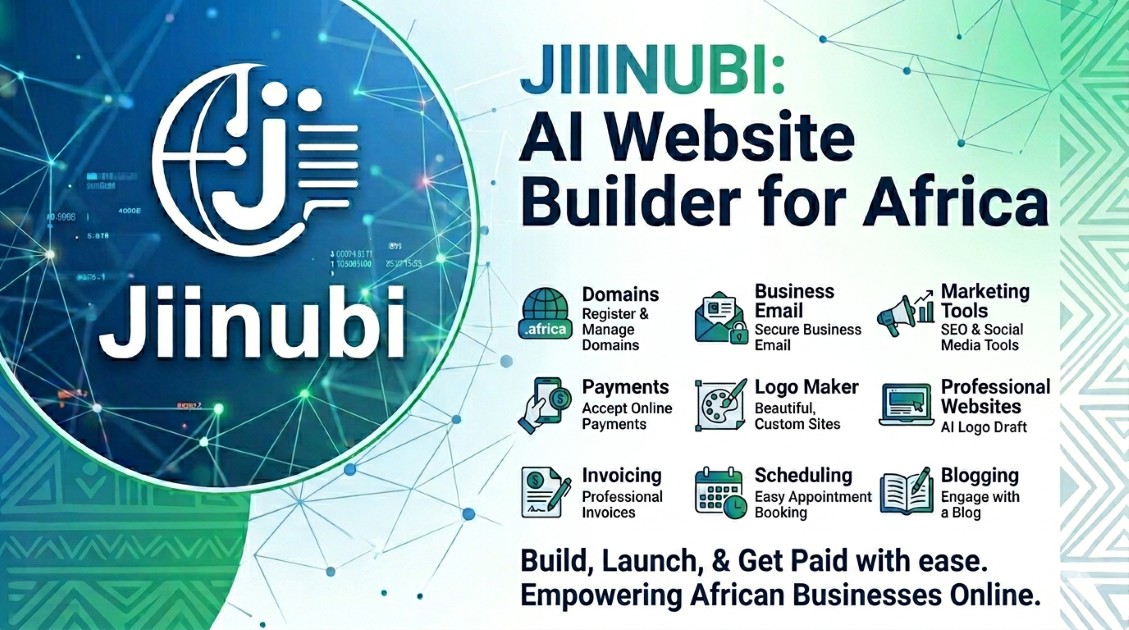
Jiinubi presents itself as an AI website builder and all-in-one platform for Africa and beyond. Its public-facing tools include website building, online stores, service bookings, invoicing, donations, blogs, portfolios, domains, SEO tools, payments, analytics, social media management, and professional digital identity. In simple terms, Jiinubi helps people move from having talent to having a platform.
That matters for South Sudan’s human-capital journey. One barrier in an emerging knowledge economy is not only lack of talent. It is lack of digital infrastructure that allows ordinary people to show what they can do, sell what they make, publish what they know, receive payments, build credibility, and reach customers beyond their immediate location.
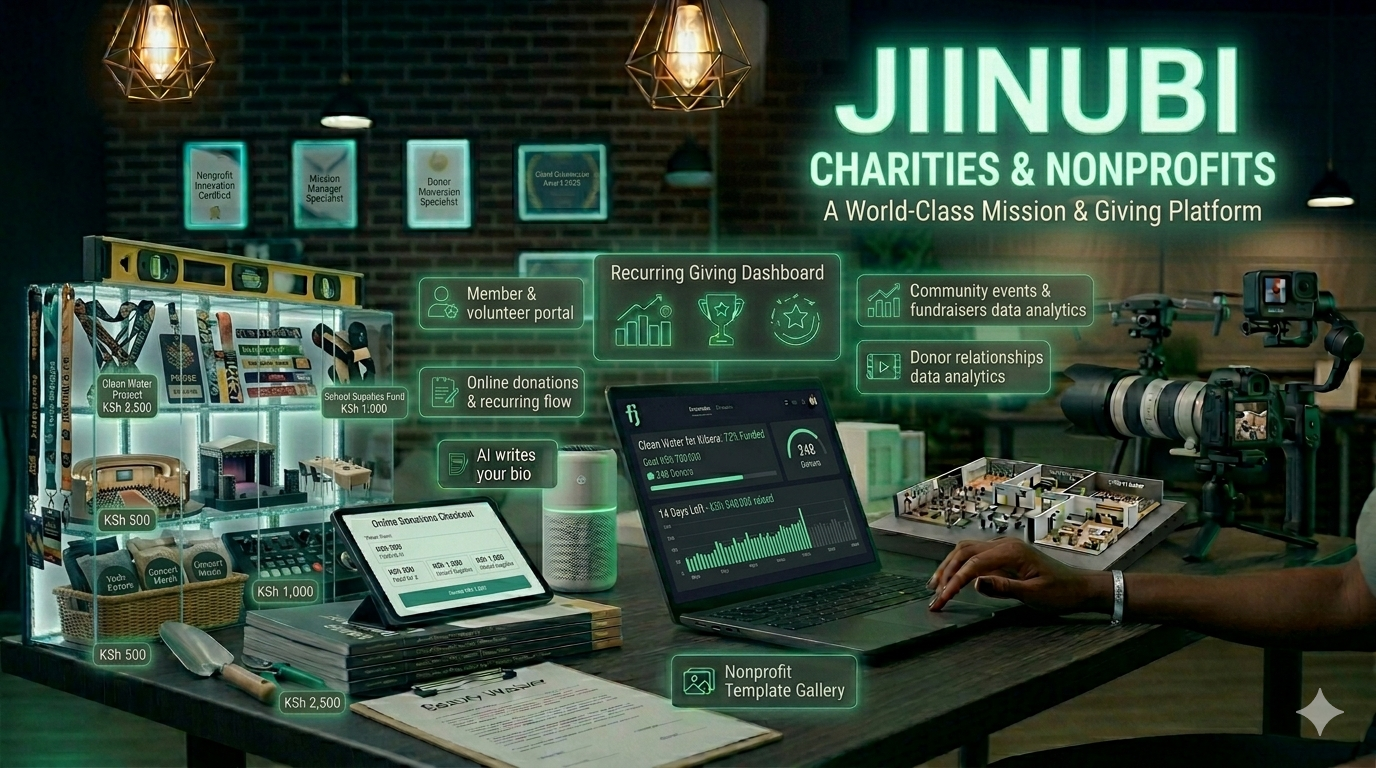
A designer needs a portfolio. A teacher may need a course page. A nonprofit needs a donation platform. A consultant needs bookings and invoices. A small business needs an online store. A youth-led initiative needs visibility. A diaspora professional may need a digital home for mentoring, events, or services. Jiinubi helps make these possibilities more accessible without requiring advanced coding or design skills.
For South Sudan and the wider African market, this is development infrastructure in practical form. It lowers the entry point into the digital economy. It helps entrepreneurs formalize their work. It supports creators, businesses, educators, nonprofits, and service providers. It turns knowledge into websites, skills into services, creativity into businesses, and ambition into something the world can find, trust, and pay for.
In the larger story of human capital, Jiinubi represents the next step after learning: application. It helps connect minds to markets.
The Jiinubi Blog Team is a collective of tech strategists and automation experts dedicated to empowering global businesses. Specialized in digital infrastructure and integrated workflows, the team provides actionable insights on AI tools, web hosting, business scaling, and the future of digital operations.












Comments
Please sign in to join the discussion.